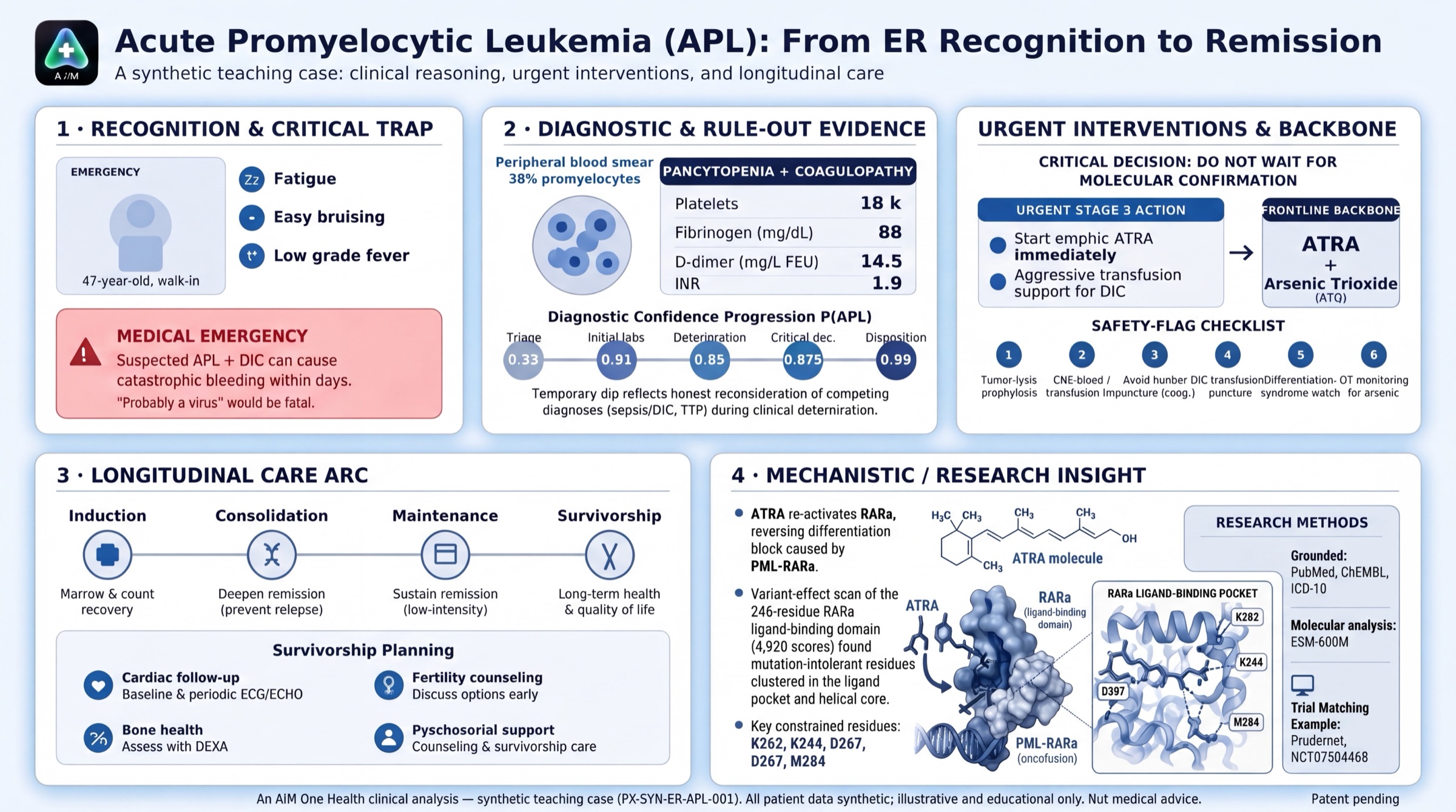
A 47-year-old walks into the emergency department with fatigue, mild bruising, and a low-grade fever — a picture a busy department could reasonably write off as a viral illness. In acute promyelocytic leukemia complicated by DIC, that reassurance is a fatal error: untreated, it can kill within days through catastrophic bleeding. Caught early and treated with all-trans retinoic acid (ATRA) plus arsenic trioxide, the same disease is curable in the large majority of patients.
We built a simulation around that knife-edge to ask one question: can a multidisciplinary AI reasoning system navigate the full arc — from the triage desk to molecular remission and survivorship — while making its reasoning inspectable at every step? This report frames the resulting claims as clinical hypotheses and tests each against what the simulation actually produced.
Abstract
Background. APL complicated by DIC is a hematologic emergency in which early hemorrhage can be fatal within days, yet the disease is highly curable when ATRA and arsenic trioxide start promptly. Recognition at ED triage is the pivotal, error-prone step. We evaluated whether a grounded multi-agent AI reasoning system (BrainMAAS) could navigate the full care arc of a single synthetic APL case while keeping every recommendation auditable.
Methods. We simulated one synthetic scenario (PX-SYN-ER-APL-001) across five encounter stages, from triage to disposition. A mixture-of-experts multidisciplinary council (seven specialist agents, a routing layer, a reranking/consensus layer, and a citation contract) reasoned over a live-refreshed grounding store (ClinicalTrials.gov, PubMed, ChEMBL, ICD-10). A single-LLM baseline — one call per stage, without retrieval, councils, or a citation contract — served as comparator. Structural constraint on the RARα ligand-binding domain was scored with ESMC-600M (4,920 single-residue variant effects).
Results. Consensus belief in APL evolved 0.25 → 0.91 → 0.88 → 0.91 → 0.98 across the five stages, with an intentional dip at deterioration as sepsis-associated DIC and thrombotic thrombocytopenic purpura transiently re-entered the differential. The system initiated empiric ATRA at high suspicion (stage 3) before molecular confirmation, tracked six safety flags, and returned live recruiting-trial matches. Both arms crossed the diagnostic threshold at stage 2 (a tie on time-to-diagnosis), but the system was superior on calibration (0.881 vs 0.850), safety-flag recall (100% vs 83%; the baseline omitted tumor-lysis prophylaxis), citation coverage (100% vs 17%), and recruiting-trial matches (41 vs 0). Of 209 recommendations, 208 were grounded in a retrieved source; the single exception was a declared abstention rather than a fabricated citation.
Conclusions. In this single synthetic case, the multidisciplinary scaffold did not by itself improve diagnostic accuracy, but it made the reasoning grounded, safety-checked, and navigable — the properties that separate a plausible answer from one a care team can verify and act on. These findings are illustrative of system behavior in one scenario and require prospective, multi-case, externally validated evaluation before any clinical inference is drawn.
1. Introduction
In the setting of APL complicated by DIC, mistaking the presentation for a benign viral illness would be fatal: untreated APL can kill within days through catastrophic bleeding. The same disease is one of oncology's success stories — caught early and treated with ATRA plus arsenic trioxide, it is curable in the large majority of patients, and the prognosis hinges on recognizing it quickly and starting differentiation therapy before genetic confirmation returns.
We built a simulation around this knife-edge to ask whether a multidisciplinary AI reasoning system can navigate the full arc — from the triage desk to molecular remission and survivorship — while making its reasoning inspectable at every step. The report states its claims as clinical hypotheses and tests each against what the simulation actually produced, rather than asserting them. Methods, comparator design, metrics, and limitations are given in full so the behavior can be scrutinized and, in future work, reproduced.
2. Methods
2.1 Scenario and study design
The study comprises a single synthetic scenario, PX-SYN-ER-APL-001, structured as a five-stage clinical encounter: (1) triage, (2) initial laboratory results, (3) clinical deterioration, (4) the critical treatment decision, and (5) disposition. All patient data are synthetic and were authored to represent a canonical APL-with-DIC presentation. Because n = 1, the study is designed to characterize system behavior and reasoning transparency, not to estimate diagnostic performance in a population.
2.2 System architecture (BrainMAAS)
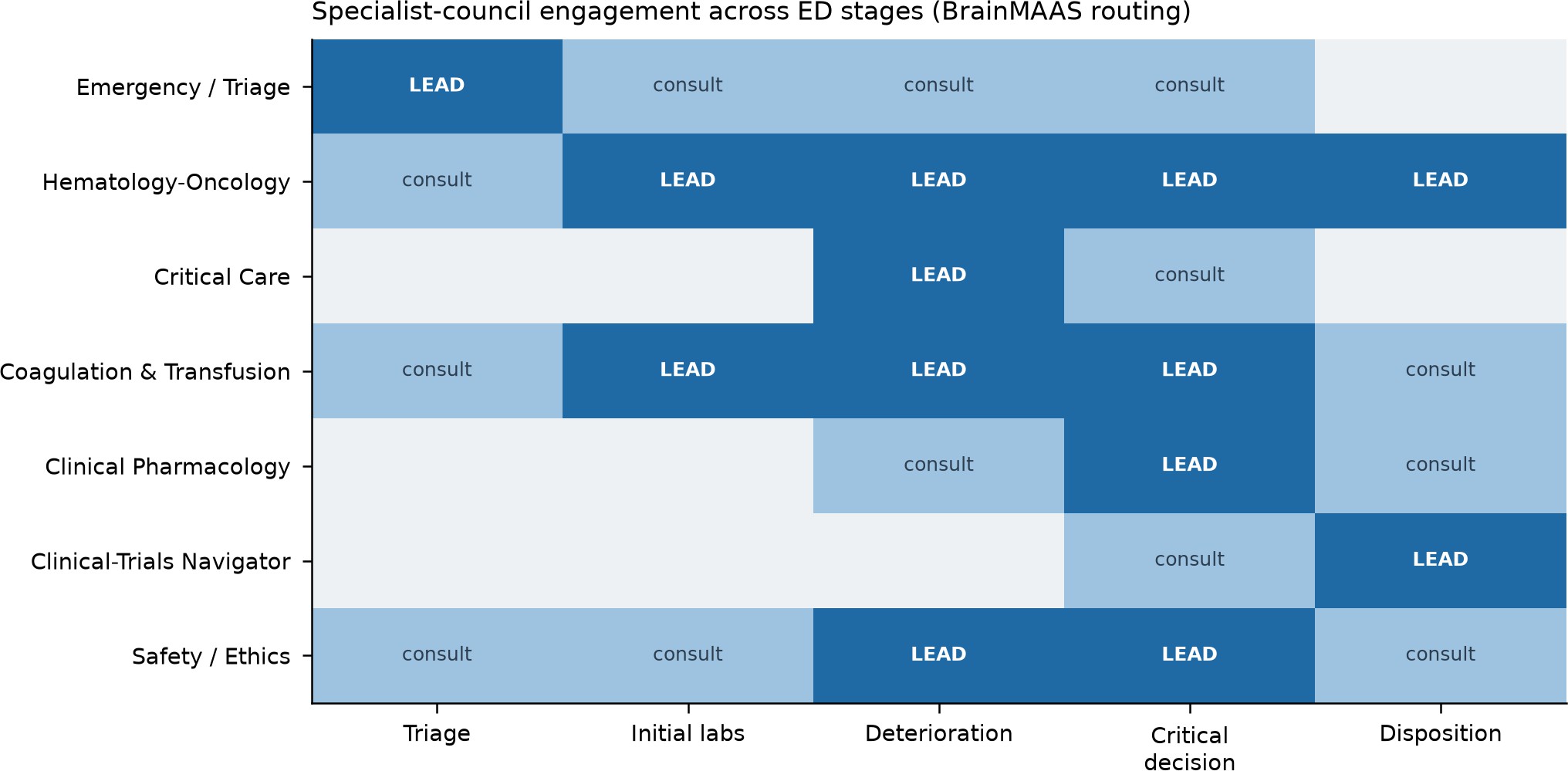
The reasoning engine is a mixture-of-experts multidisciplinary council with four layers. A grounding store (Layer 0) is refreshed live and hashed for provenance before any reasoning, drawing on ClinicalTrials.gov, ChEMBL (ATRA as a retinoic-acid-receptor agonist, arsenic trioxide, and gemtuzumab flagged as withdrawn), PubMed, and ICD-10 (C92.40 for APL, D65 for DIC); retrieval precedes recommendation. A router (Layer 1) decides which specialists engage at each stage and which leads — Emergency Medicine at triage, Hematology-Oncology from the laboratory results onward (Figure 2). Seven specialist agents (Layer 2) reason in parallel, each seeing the same accumulating clinical picture plus the retrieved evidence for its stage. A reranking layer (Layer 3) consolidates the councils into a ranked plan and a consensus probability of APL, under a citation contract in which every therapy suggestion carries a source identifier and a confidence level, guidelines are version-pinned, a human-in-the-loop checkpoint is required, and any council that cannot ground a claim must declare the gap rather than fabricate a citation.
2.3 Comparator
The baseline is a single large-language-model configuration issued one plain call per stage on the same clinical picture, but without retrieval, without the specialist councils, and without the citation contract. This isolates the contribution of the multidisciplinary, grounded scaffold from the underlying model's diagnostic ability.
2.4 Molecular constraint analysis
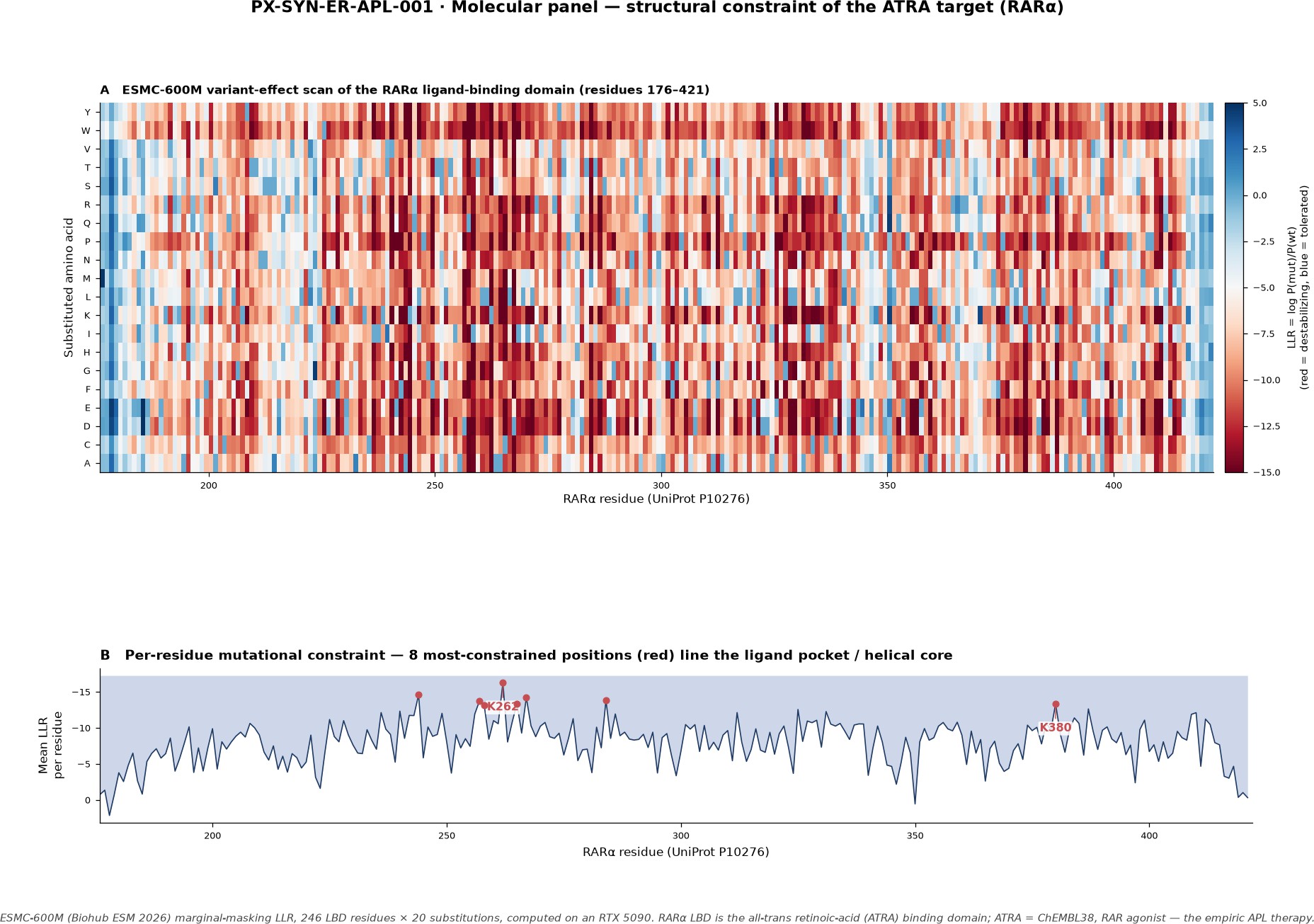
To connect the bedside decision to its molecular rationale, we scored structural constraint across the RARα ligand-binding domain. Using ESMC-600M on a single NVIDIA RTX 5090, every possible single-residue substitution across the 246-residue domain was scored, yielding 4,920 variant-effect estimates. The most mutation-intolerant positions were identified from the log-likelihood-ratio distribution. An ESMFold three-dimensional structure was attempted but not completed because the host's network path to the model weights was throttled; this is an infrastructure limitation, not a scientific result, and the variant scan is the analysis of record.
2.5 Endpoints
Pre-specified endpoints were: the consensus P(APL) trajectory across the five stages; treatment-hypothesis quality on a 0–5 rubric; calibration expressed as 1 − Brier score; safety-flag recall over a fixed six-item checklist (tumor-lysis prophylaxis; CNS-bleed and transfusion thresholds; avoidance of lumbar puncture during coagulopathy; DIC transfusion targets; differentiation-syndrome surveillance; and QT-interval monitoring for arsenic); specialist-routing precision; citation coverage; and the number of matched recruiting trials. Qualitative endpoints were scored against the simulation's own logged outputs — a dependency addressed in the Limitations.
3. Results
3.1 Diagnostic trajectory
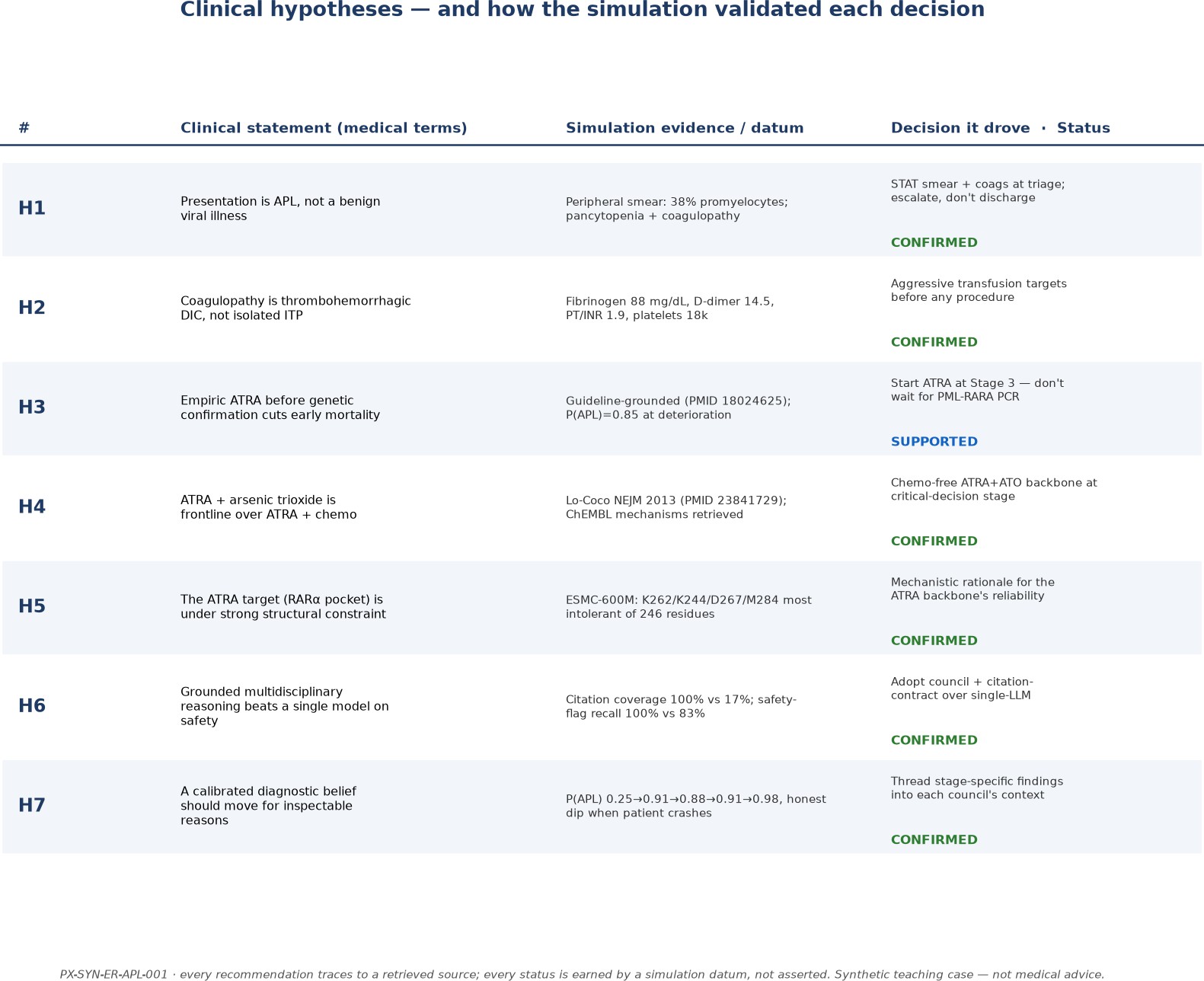
The system's consensus belief that the presentation represented APL rose from 0.25 at triage to 0.98 at disposition — and, importantly, for reasons that can be inspected at each stage (Table 1, Figure 3). The single most consequential move occurs at stage 3, where ATRA is started empirically before the genetics resolve: this mirrors the real-world teaching point that waiting costs lives and that ATRA is safe enough to begin on strong suspicion. The belief does not climb monotonically. It dips from 0.91 to 0.88 at deterioration because, as the patient crashes, sepsis-associated DIC and thrombotic thrombocytopenic purpura genuinely re-enter the differential; an honest reasoner widens rather than narrows at that moment, and confidence recovers once the molecular result lands.
| Stage | Consensus P(APL) | Lead specialty | Grounded top action |
|---|---|---|---|
| 1 · Triage | 0.25 | Emergency Medicine | STAT CBC + peripheral smear + coagulation panel; avoid invasive procedures |
| 2 · Initial labs | 0.91 | Hematology-Oncology | Recognize thrombohemorrhagic syndrome; code C92.40 + D65 |
| 3 · Deterioration | 0.88 | Hematology-Oncology | Start empiric ATRA now + transfusion support |
| 4 · Critical decision | 0.91 | Hematology-Oncology | ATRA + arsenic trioxide frontline (PMID 23841729) |
| 5 · Disposition | 0.98 | Hematology-Oncology | Confirm coding; match to recruiting trials |
Table 1. The five-stage encounter, the consensus probability of APL at each stage, the leading specialty, and the top grounded action.
3.2 Hypothesis testing
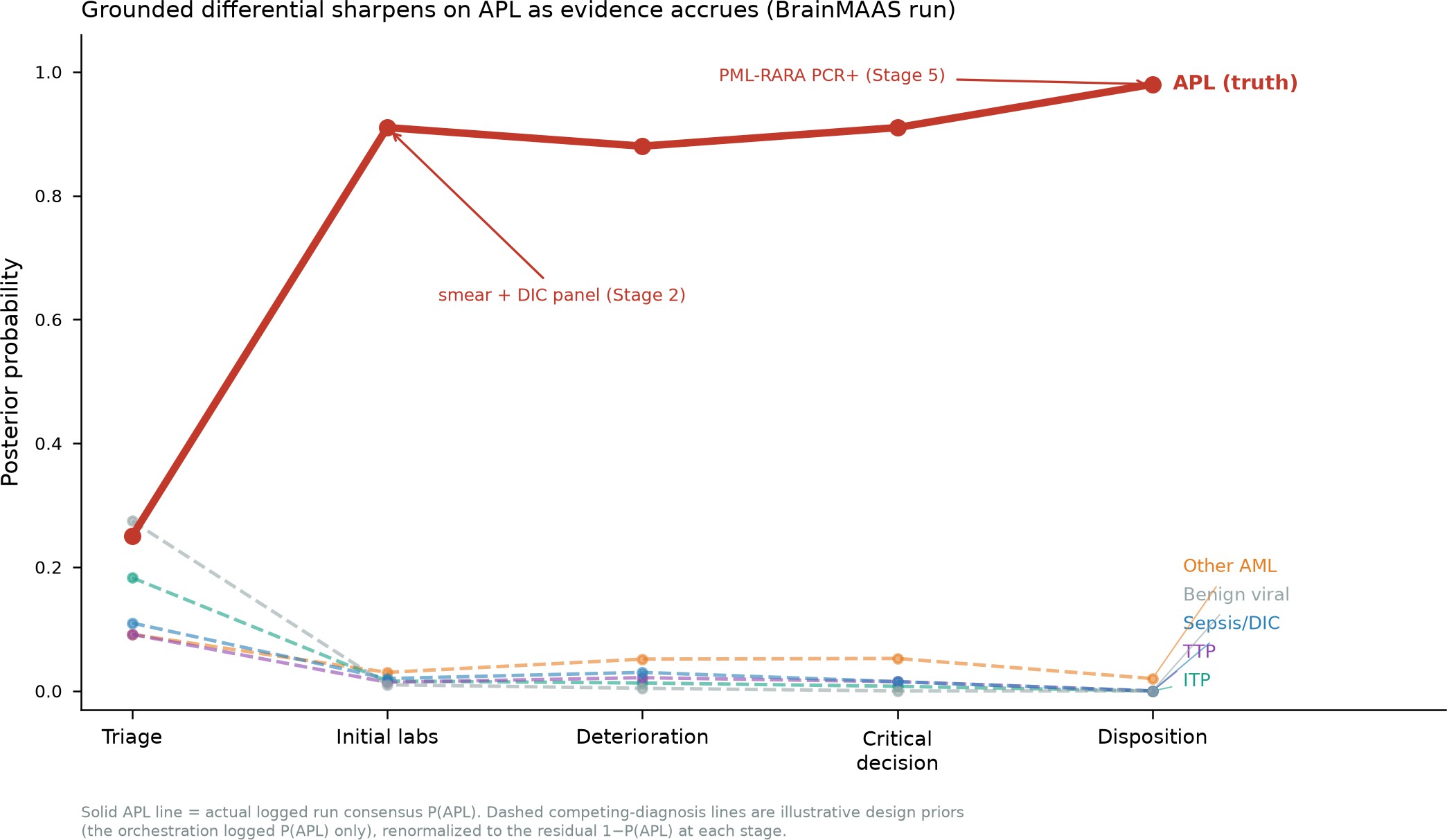
Each clinical claim was framed as a hypothesis, paired with the simulation datum bearing on it, the decision it drove, and an earned status (Table 2, Figure 4). Every status is tied to a value the simulation produced, and every therapy recommendation traces to a retrieved, citable source — the operational meaning of “grounded” in this work.
| # | Clinical hypothesis | Simulation evidence | Decision it drove | Status |
|---|---|---|---|---|
| H1 | Presentation is APL, not benign viral illness | Smear 38% promyelocytes; pancytopenia + coagulopathy | STAT smear + coags; escalate, do not discharge | Confirmed |
| H2 | Coagulopathy is thrombohemorrhagic DIC, not isolated ITP | Fibrinogen 88 mg/dL, D-dimer 14.5, INR 1.9, platelets 18k | Aggressive transfusion targets before procedures | Confirmed |
| H3 | Empiric ATRA before genetics cuts early mortality | Guideline (PMID 18024625); P(APL) 0.88 at deterioration | Start ATRA at stage 3; do not wait for PCR | Supported |
| H4 | ATRA + arsenic trioxide frontline over ATRA + chemo | Lo-Coco NEJM 2013 (PMID 23841729); ChEMBL mechanisms | Chemo-free ATRA + ATO backbone | Confirmed |
| H5 | RARα pocket is under strong structural constraint | ESMC-600M: pocket/helical-core residues most intolerant | Mechanistic rationale for the backbone | Confirmed |
| H6 | Grounded MDT reasoning beats a single model on safety | Citation coverage 100% vs 17%; safety recall 100% vs 83% | Adopt council + citation contract | Confirmed |
| H7 | Diagnostic belief should move for inspectable reasons | P(APL) 0.25 → 0.91 → 0.88 → 0.91 → 0.98 | Thread stage findings into each council | Confirmed |
Table 2. Clinical hypotheses, the simulation evidence bearing on each, the decision it drove, and its earned status.
3.3 Differential falsification
A differential is trustworthy only if it can eliminate the alternatives, and in APL a wrong “obvious” call is precisely how patients die. The simulation was therefore run as a falsification engine: as evidence accrued, each competing diagnosis had to be driven toward zero for a specific reason, or survive (Figure 5). Benign viral illness fell from 0.27 to effectively zero, isolated immune thrombocytopenia from 0.18 to zero, and sepsis-driven DIC from 0.11 to zero, each closed out by a defined finding.
- A1 · Benign viral illness — eliminated. Would have meant discharge and death from DIC hemorrhage within days; settled by the smear (38% promyelocytes) and the coagulopathy.
- A2 · Isolated immune thrombocytopenia — ruled out. Would have under-treated a consumptive coagulopathy; settled by the DIC panel (low fibrinogen, high D-dimer, high INR).
- A3 · Thrombotic thrombocytopenic purpura — ruled out. Would have prescribed the wrong therapy and delayed ATRA; settled by the absence of a microangiopathic/schistocyte picture.
- A4 · Sepsis-driven DIC — ruled out. Would have chased a phantom infection; settled by the absence of a septic source and the diagnostic promyelocytes.
- A5 · Wait for PML-RARA PCR before ATRA — corrected. A tempting, safe-looking shortcut the evidence overturns; guideline (PMID 18024625) supports empiric treatment at high suspicion, because the confirmation delay during peak bleeding risk costs lives.
- A6 · A single strong model is sufficient — retained but gated. The baseline does reach the diagnosis, but it is bounded by 17% citation coverage, a missed tumor-lysis flag, and zero trial matches, and is retained only as a gated comparator.
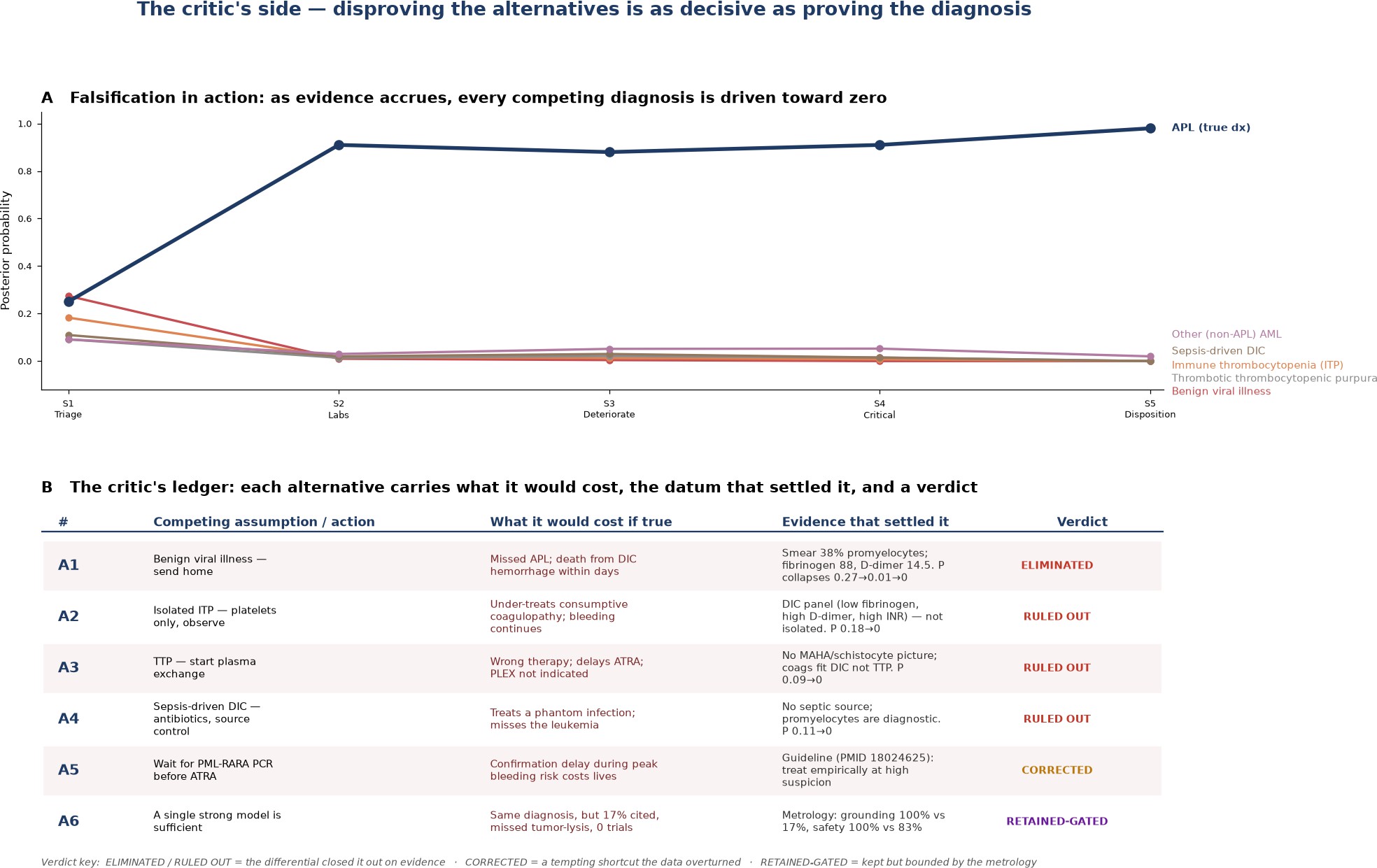
The negative results carry as much weight as the positive one: a defensible diagnosis is one for which it can be shown, with evidence, why it is not each of the other things it could have been.
3.4 System versus baseline
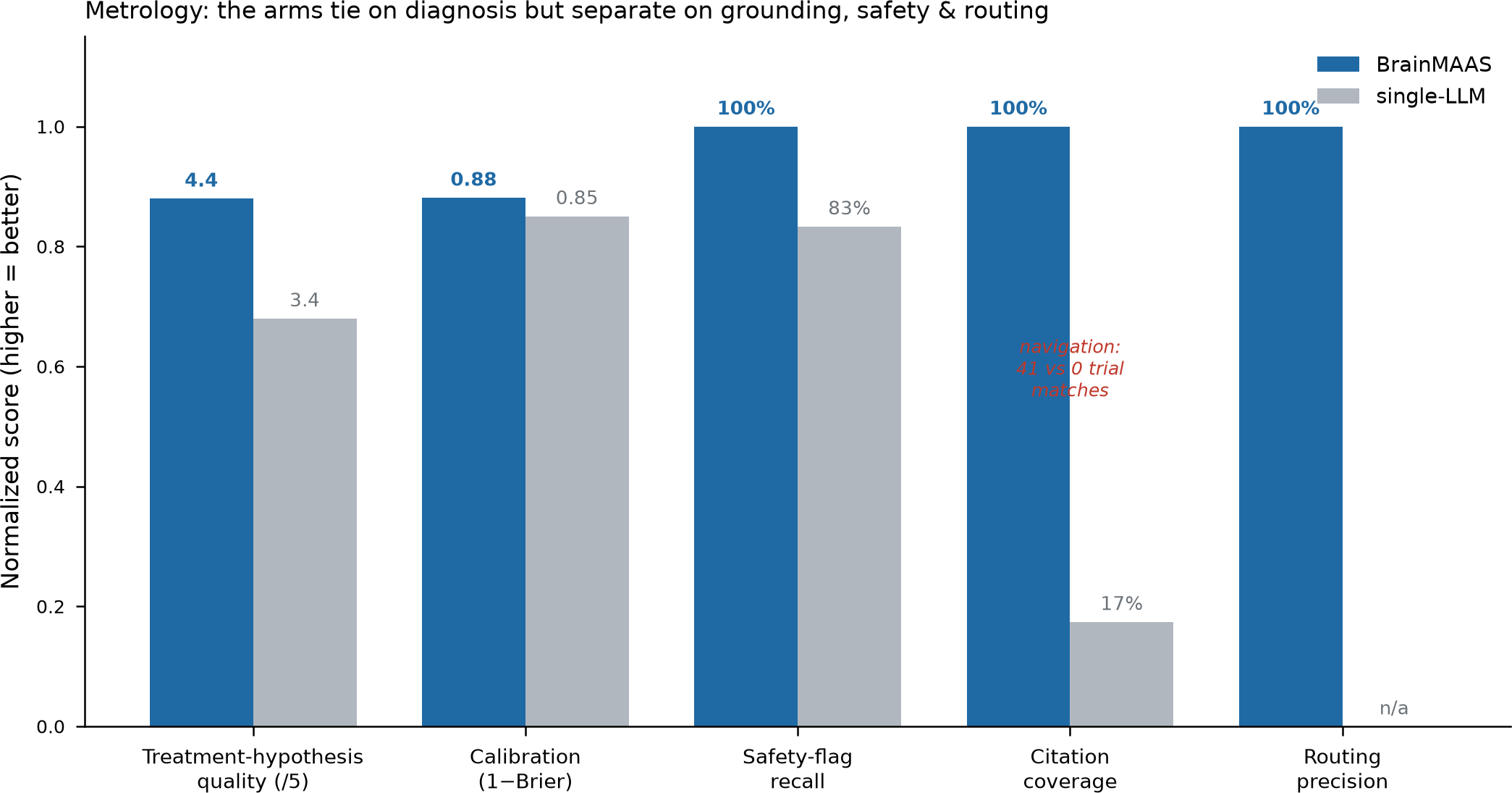
On the diagnosis itself, the two arms tie — both cross the threshold at stage 2. The separation is everywhere else: in grounding and safety (Table 3, Figure 6). The baseline omitted tumor-lysis prophylaxis, a safety-relevant lapse; its citations were parametric free-text from memory rather than provenance-hashable sources (17% coverage); and it surfaced no recruiting trials, having no live connection to ClinicalTrials.gov. The multidisciplinary scaffold did not make the model a better diagnostician; it made the output grounded, safety-checked, and navigable.
| Endpoint | BrainMAAS | Single-LLM | Winner |
|---|---|---|---|
| Treatment-hypothesis quality (0–5) | 4.40 | 3.40 | BrainMAAS |
| Time-to-correct-diagnosis | Stage 2 | Stage 2 | Tie |
| Calibration (1 − Brier) | 0.881 | 0.850 | BrainMAAS |
| Safety-flag recall (6 items) | 100% | 83% | BrainMAAS |
| Specialist-routing precision | 100% | — | BrainMAAS |
| Citation coverage | 100% | 17% | BrainMAAS |
| Recruiting-trial matches | 41 | 0 | BrainMAAS |
Table 3. Metrology endpoints for the grounded multidisciplinary system versus a single-LLM baseline on the same synthetic scenario.
3.5 Molecular constraint on the drug target
ATRA works by binding and re-activating RARα, the receptor that the PML-RARA fusion holds in a repressive state. The ESMC-600M scan of the 246-residue ligand-binding domain (4,920 variant-effect scores) localized the most mutation-intolerant residues to the ligand pocket and the helical core (Figure 7). The drug therefore depends on the most conserved part of the receptor, offering one structural reason the ATRA + arsenic-trioxide backbone is so reliably effective.
3.6 Clinical course: vital signs and longitudinal laboratories
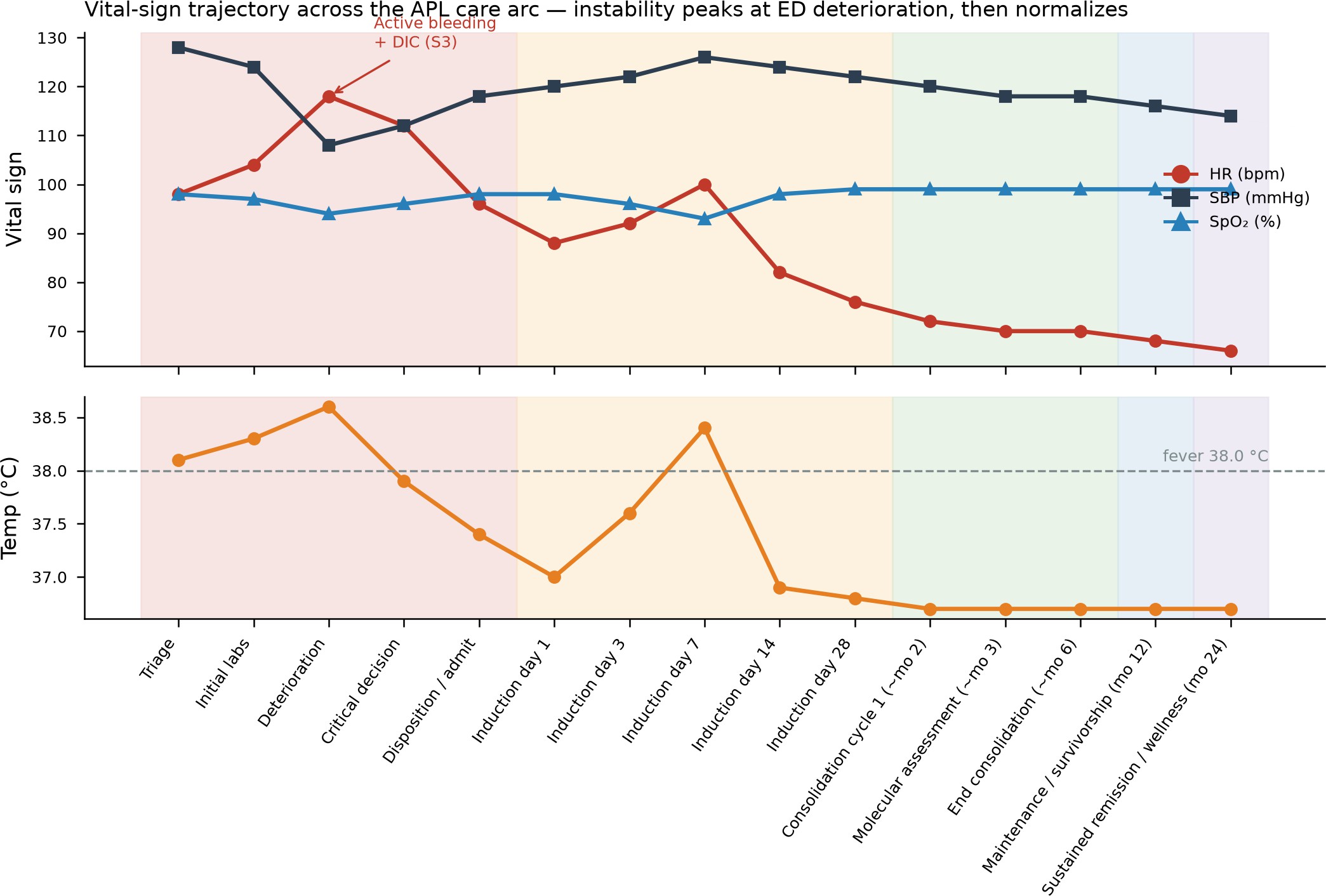
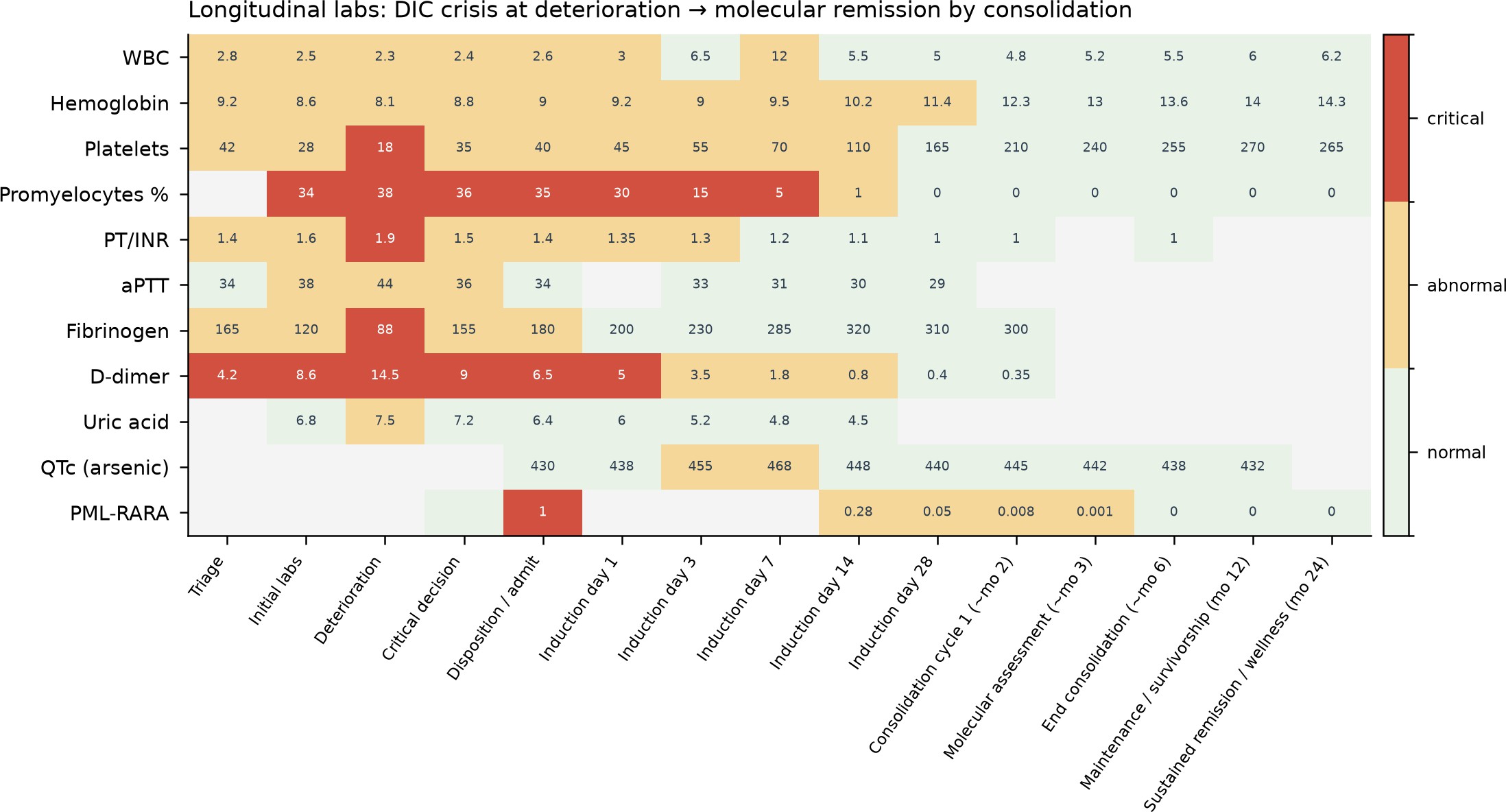
Beyond the diagnostic decision, the simulation tracked the physiological arc of the encounter. Vital-sign instability peaked at ED deterioration — tachycardia and a transient blood-pressure fall during active bleeding and DIC — with a later differentiation-syndrome fever bump during induction, then normalization by survivorship (Figure 8). The longitudinal laboratories show the same story at the level of counts and coagulation: the DIC crisis at deterioration (nadir fibrinogen 88 mg/dL, D-dimer 14.5, platelets 18k), followed by correction of the coagulopathy, clearance of circulating promyelocytes, and molecular clearance of PML-RARA by consolidation (Figure 9). QTc was monitored throughout for arsenic exposure.
3.7 The full care arc and trial matching
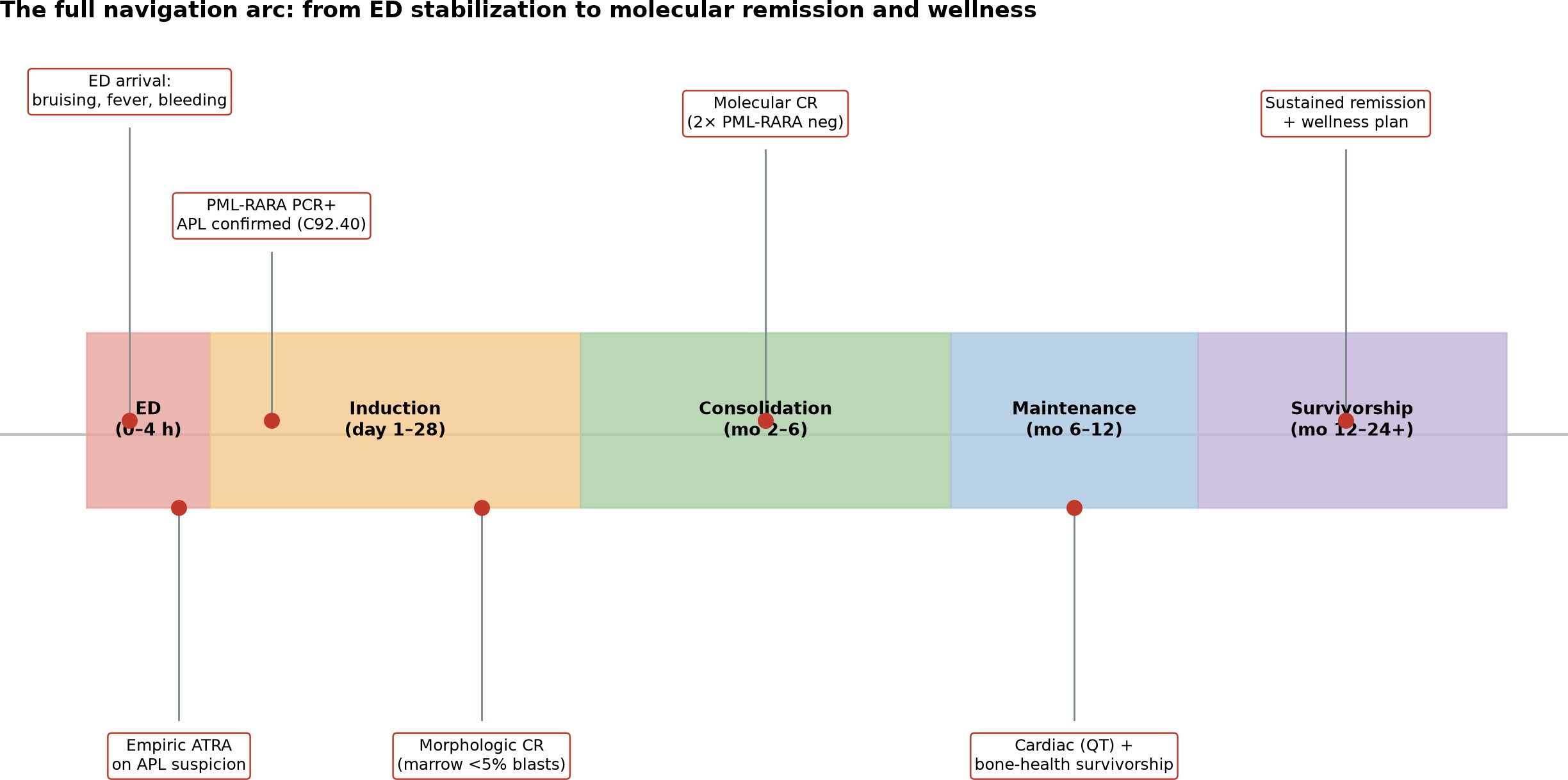
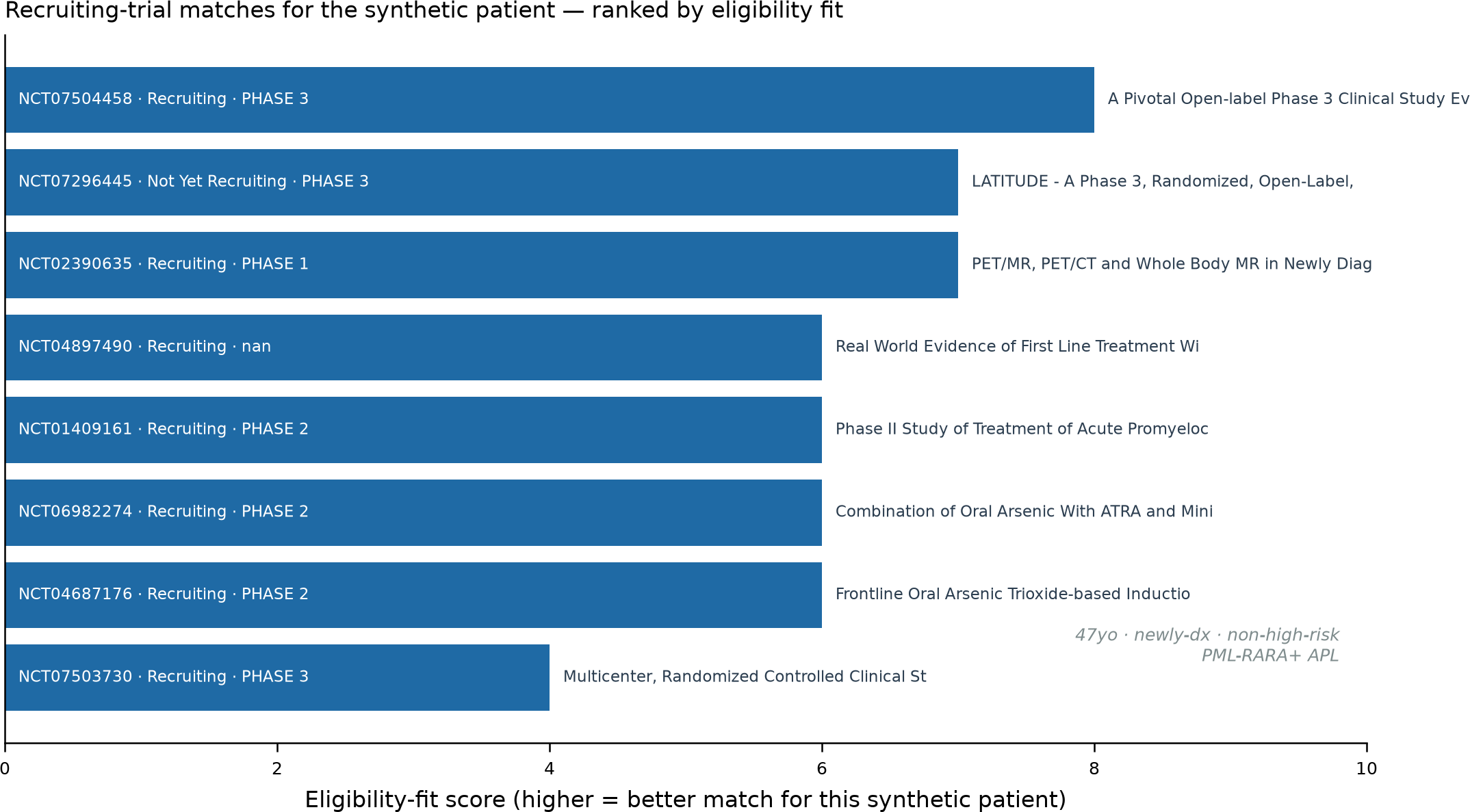
Stabilization is only the first chapter. The care arc runs induction → consolidation → maintenance → molecular remission → survivorship, risk-stratified on the ATRA + arsenic-trioxide backbone with a phase-by-phase surveillance schedule (Figure 10). Live trial matching returned ranked, eligibility-scored matches to recruiting studies pulled from ClinicalTrials.gov, the top fit being a Phase 3 ATRA-combination trial, NCT07504458 (Figure 11). A survivorship layer covers cardiac follow-up, bone health, fertility counseling, and psychosocial support.
3.8 Engineering course-corrections
Four iterations shaped the final behavior and are reported for transparency. First, an early run plateaued at roughly 0.85 at every stage because all councils saw the same fixed context; threading a stage-specific clinical picture into each council produced the realistic 0.25 → 0.98 trajectory. Second, the reranker initially returned empty responses at disposition after exhausting its token budget mid-consolidation; per-request budgets, a trimmed payload, and a graceful-degradation wrapper resolved it. Third, an early differential figure plotted design priors rather than the logged posterior; an audit caught this, and the figure now shows the real logged values with competing curves labeled as illustrative. Fourth, in one re-run a safety/ethics statement came back uncited because it could not ground a claim in the retrieved set; rather than fabricate a citation, it declared the gap and the reranker flagged it truthfully — yielding 208 of 209 grounded recommendations, with the single exception an explicit abstention. The value of the system is not that it is always confident, but that its confidence and its uncertainty are both auditable.
4. Limitations
The most important limitation is scope: this is a single synthetic scenario (n = 1). It can illustrate how the system reasons, but it cannot establish diagnostic accuracy, calibration, or comparative superiority as generalizable findings. The comparative statements in Section 3.4 should be read as observations within one case, not evidence of a population-level effect.
Several further caveats apply. The data are synthetic and were authored to depict a canonical presentation, which may make the diagnostic task more separable than routine practice. Qualitative endpoints were scored against the simulation's own logged outputs rather than an independent reference standard, so the “confirmed/supported” statuses are earned against internal numbers rather than external ground truth. There is no external validation, no inter-rater reliability for the rubric-based scores, and no prospective deployment. The molecular analysis is a computational variant-effect scan, not an experimental measurement, and the three-dimensional fold was not completed. Finally, guideline and trial retrieval reflect a single point in time; version-pinning mitigates but does not remove the risk of drift. Prospective, multi-case, externally adjudicated evaluation is required before any clinical inference is drawn.
5. Conclusions
On a single synthetic APL-with-DIC case, a grounded multi-agent reasoning system navigated the full arc from triage to survivorship, started empiric differentiation therapy at the correct decision point, tracked the relevant safety flags, and matched recruiting trials — while keeping every recommendation traceable to a source. It did not out-diagnose a single-model baseline, which reached the same diagnosis at the same stage; its advantage lay in grounding, safety-flag recall, calibration, and navigability. Both the confirmations and the falsifications are part of the evidence, and the one place the system could not ground a claim, it said so. The result is best read not as a performance claim but as a demonstration of a design in which confidence and uncertainty are equally auditable — a property that warrants prospective, multi-case validation.